
How FEP-Based Peelable Heat Shrink Tubing Supports Scalable Catheter Manufacturing


Reducing Process Variability During Heat Shrink Removal
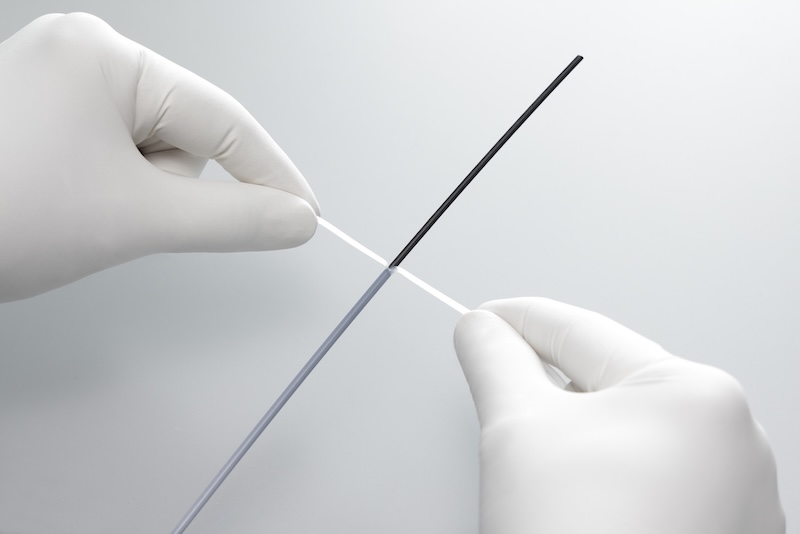
As catheter manufacturing becomes more complex and tightly controlled, peelable heat shrink tubing has become an important aid for repeatable bonding, forming, and lamination processes. Consistent removal after thermal processing minimizes downstream risk.
Junkosha FEP-based Peelable Heat Shrink Tubing is designed to deliver controlled, linear peelability along the catheter axis helping manufacturers improve process consistency, reduce variability during heat shrink removal, and support scalable production.
Peelability Designed into the Material
Rather than treating peelability as a secondary characteristic, Junkosha Peelable Heat Shrink Tubing is engineered with peel behavior as a controlled mechanical performance characteristic. By optimizing fluoropolymer material properties and extrusion design, the tubing is designed to provide:
• Thermal stability during bonding and forming operations
• Uniform radial constraint across complex geometries
• Predictable mechanical removal after thermal processing
This allows the heat shrink to function not just as a consumable material, but also as an integral part of a stable and repeatable manufacturing process.
Why Linear Peel Behavior Matters in Catheter Manufacturing
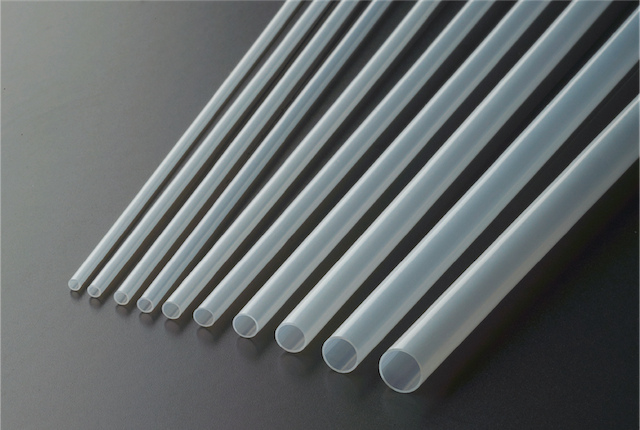
Traditional non-peelable FEP heat shrink tubing requires manual skiving before removal. This additional process step can introduce variability through uncontrolled tear propagation during removal, increased radial or transverse stress and heavy dependence on operator techniques potentially leading to increased scrap or rework.
In answer to this, Junkosha Peelable Heat Shrink Tubing is engineered to promote straight, axial peel propagation along the catheter length. By following a predictable peel path aligned with shaft geometry, the tubing reduces stress generated during removal.
For manufacturers working with thin wall shafts, ultra thin or compliant balloons, multi layer laminations, and precision formed distal features, reducing radial stress during removal lowers the risk of surface damage, micro-tearing, or delamination.
Balancing Mechanical Performance
Catheter development and manufacturing processes often require heat shrink tubing to perform in two ways that can be difficult to balance. Effective peelable heat shrink tubing must provide radial constraint during thermal processing and consistent removal after processing.
With Junkosha Peelable Heat Shrink Tubing engineers can balance:
• Hoop strength for uniform containment during thermal processing
• Controlled peel force for safe, low effort removal
This balance supports stable bonding and forming processes while minimizing the risk of unnecessary stress or damage across manual, semi automated, and automated manufacturing environments.
Application-Specific Catheter Manufacturing
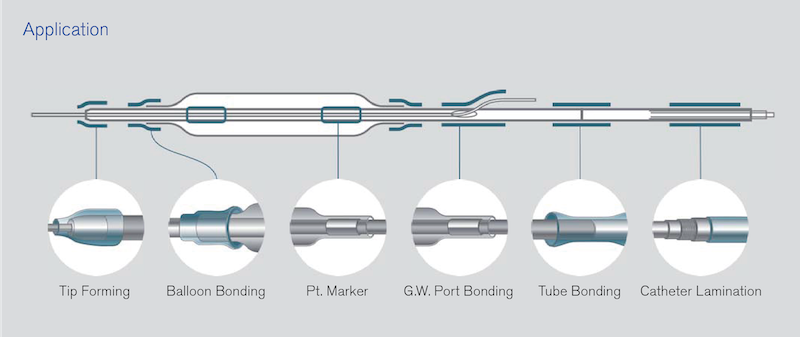
Balloon Bonding
Uniform constraining force during thermal bonding and linear peel propagation helps reduce stress at balloon necks during removal, supporting higher first-pass yield and reduced scrap.
Distal Tip Forming
By maintaining component geometry during thermal processing, predictable peel behavior helps preserve formed features during removal and supports the dimensional consistency of formed distal tip structures.
Guidewire Port Bonding
Axial peel propagation minimizes transverse stress during removal, helping maintain guidewire port integrity and enhancing bonding process consistency.
Tube Bonding & Lamination
Consistent confinement across extended bond lengths, combined with a straight peel path, simplifies removal from long-shaft assemblies and supports the efficient processing of bonded and laminated structures.
Supporting Safe and Scalable Catheter Manufacturing
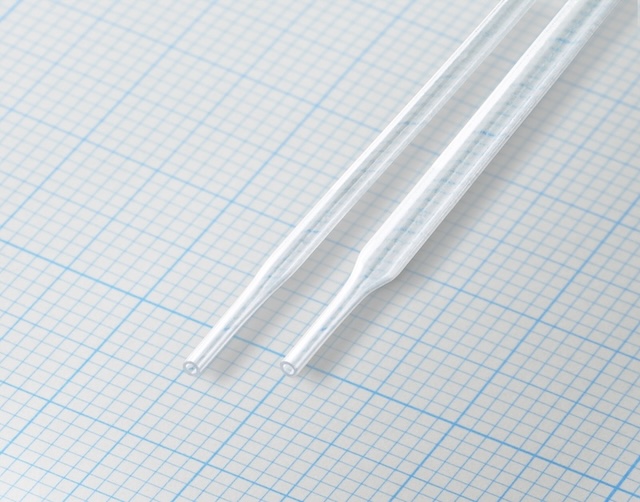
The controlled peel characteristics of Junkosha Peelable Heat Shrink Tubing are designed to reduce variability during heat shrink removal and support standardized manufacturing processes.
Linear peel behavior eliminates the need for manual skiving, improving operator safety and simplifying removal procedures. Predictable performance also supports process repeatability, process validation, global manufacturing transfer, and the implementation of automated production processes.
The Solution for Modern Catheter Manufacturing
Junkosha FEP Based Peelable Heat Shrink Tubing is engineered to support modern catheter manufacturing through controlled linear peelability, balanced mechanical performance, and application focused design. These characteristics help reduce process variability during heat shrink removal while supporting manufacturing consistency and production scalability.
In customer production environments where Junkosha Peelable Heat Shrink Tubing is used, outcomes have included improved yield and greater operator confidence resulting from more predictable removal performance.
For engineers seeking controlled, production ready performance, backed by decades of fluoropolymer expertise, Junkosha Peelable Heat Shrink Tubing offers a robust solution for advanced catheter manufacturing applications.